| |
Metallizing
Metallizing is a metal-coating process in which a metal substrate
is coated with another metal by thermal-spray equipment. The metal
coating is typically applied with a twin-arc wire gun or a gas-powered
gun. The HVOF process has also become popular as a metallizing procedure
in recent years and is especially efficient in the applications of
ceramic and plastics as well as metal. Any metal that can be made
into a wire can be melted and sprayed onto a substrate in the twin-arc
and gas-powered thermal-spray procedures; and a wide variety of common
and exotic metal substrates can be metallized. Zinc, aluminum, copper,
stainless steel, magnesium and various exotic metals are all commonly
used in metallizing by Superior Shot Peening. Metallizing can be
on-site or in-house and can be performed in almost any weather.
Metallizing combines the advantage of a mechanically-bonded coating
that will not deform the substrate with the option of choosing
from several aesthetically pleasing metallic finishes. Before being
bonded to the substrate, the metal is first atomized by the metal-spray
equipment. The atomized droplets are then propelled towards the
substrate where they flatten upon impact and begin to bond to the
substrate object and to each other. This gentle, low-heat process
allows for a strong mechanically-bonded coating of desired thickness
to be applied to the substrate with no melting or warping of the
target.
In many industries, a popular use of metallizing is the use of
metallizing for cathodic protection. In this case, a metal that
is more likely to loose electrons (and act as an anode) is used
to coat a substrate metal that is less likely to loose electrons.
When corrosion begins, the corrosion is more likely to form on
the sacrificial anode (the metal coating) than the protected cathode
(the substrate). This is a highly effective way of protecting a
wide variety of metal equipment particularly in soils and marine
environments. Some of the applications for metallizing are tension
legs for offshore platforms, bridges, underwater concrete structures,
and industrial plants where elevated temperatures prohibit standard
coatings, such as stacks and mufflers.
Hard Banding
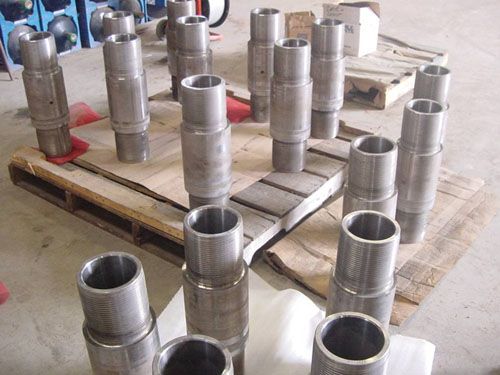
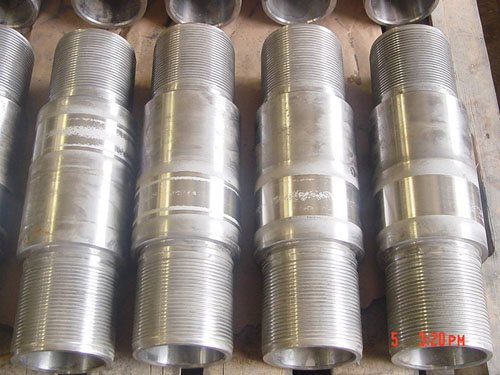
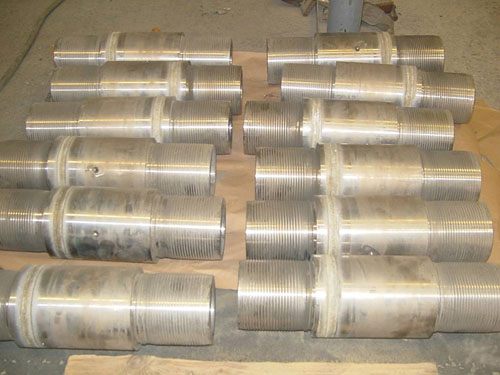
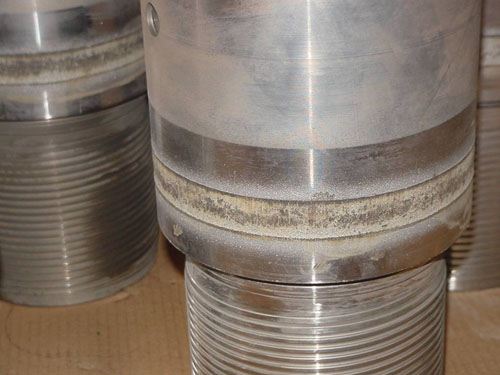
Hard banding is a process by which a rough, wear-resistant, band
of tungsten carbide is applied to a metal part to help protect
the metal from wear in a specific area. This tungsten-carbide hard
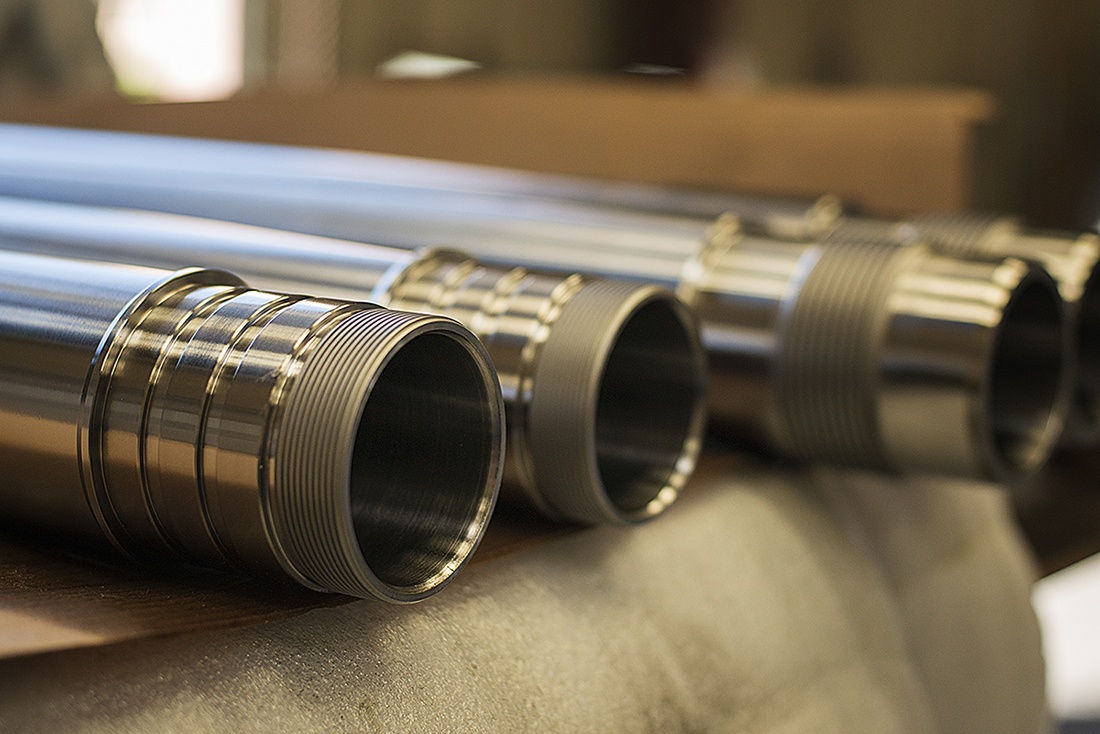
banding is commonly used in the drilling tool industry on downhole
tools. The band is applied by the metallizing thermal-spray process
in an area on the tool that is expected to undergo high friction.
As it need only be applied over a limited surface area, it is an
economical way to eliminate wear and extend tool life. Superior
Shot Peening is one of only a handful of companies in the nation
that has the ability and expertise to provide hard banding.
For more about
metallizing/hard banding, select one of the following:
Overview | Technical Information | Photographs
|
|
For
more information about Metallizing/Hard Banding, or other coatings
offered by Superior Shot Peening, click on one
of the following:
|
|